
Understanding Dry Eye Disease
A guide from your care team at Towne Lake Eye Associates to help you understand your diagnosis, your treatment plan, and how to care for your eyes at home.
30M
Americans affected by dry eye
86%
of cases linked to oil gland issues
6×
more likely in contact lens wearers
What is dry eye disease?
Dry eye is more than occasional irritation. It's a chronic condition involving your tear film — and for most people, the root cause is their eyelid oil glands, not a lack of tears.
Every time you blink, a thin tear film coats your eye. That film has three layers: an oil layer on top (produced by your Meibomian glands), a watery middle layer, and a mucus base that helps it stick. When any of these layers break down, your eye becomes vulnerable — leading to irritation, fluctuating vision, light sensitivity, and over time, real damage to the surface of the eye.
The most important thing to understand is: dry eye is progressive. Left unmanaged, it gets worse. But caught early, the progression can be slowed significantly — and many patients experience substantial relief.
Why your oil glands matter
The Meibomian glands — a row of tiny glands behind your eyelashes — produce the oil that prevents your tears from evaporating too quickly. When these glands become blocked or stop functioning, the tear film breaks down within seconds of every blink.
86% of dry eye patients have some degree of Meibomian Gland Dysfunction (MGD).
Symptoms of dry eye
The #1 symptom of dry eye disease isn't dryness — it's fluctuating vision. If your eyesight clears briefly when you blink, your tear film is likely unstable.
Vision fluctuation
Blurry vision that briefly clears with a blink. The most common and often overlooked symptom.
Burning or stinging
A burning, gritty, or scratchy sensation — often worse later in the day or in dry environments.
Light sensitivity
Glare, photophobia, or discomfort in bright light, especially while driving or on screens.
Eye fatigue
Tired, heavy eyes — especially after reading, screens, or extended periods of concentration.
Watery eyes
Paradoxically, dry eye can cause excessive tearing — your eyes overcompensate when the tear film is unstable.
Redness & irritation
Redness, soreness, or a foreign body sensation — as though something is in your eye.
Contact lens wearers
If your lenses feel uncomfortable by mid-afternoon, or you can't wear them as long as you used to, dry eye is likely the reason. Contact lens wearers are 4–6 times more likely to develop significant dry eye.
Types of dry eye
Dry eye isn't one disease — it's a family of conditions. Understanding your type is the first step to effective treatment.
Evaporative Dry Eye (EDE) — Most common
Your oil glands are blocked or not producing enough oil, so tears evaporate too quickly. The root cause is Meibomian Gland Dysfunction (MGD). Your tear volume may be normal, but the quality is poor. Present in 86% of dry eye patients.
Aqueous Deficient Dry Eye (ADDE)
Your lacrimal glands aren't producing enough tears. This can be caused by certain medications (antihistamines, beta-blockers, antidepressants), autoimmune conditions like Sjögren's syndrome, or diabetes.
Mixed Dry Eye
As dry eye progresses, both problems occur together — poor oil quality AND reduced tear volume. This is common in moderate to severe disease and requires a more comprehensive treatment approach.
Blepharitis & Demodex-Related
Bacterial buildup or a microscopic mite called Demodex can colonize your eyelash follicles, causing lid margin inflammation, blocked glands, and chronic irritation. Look for “collarettes” — tiny white sleeves at the base of your lashes — as a sign.
Rosacea-Related Dry Eye
90% of people with facial rosacea also have MGD. Heat, alcohol, spicy food, sun exposure, and stress can all trigger flares. Treating both the skin and the eyes together is essential.
In-office treatments
At-home care maintains your results. In-office treatments address root causes that home care cannot reach — blocked glands, deep inflammation, and bacterial biofilm.
| Target | Condition | How we treat it |
|---|---|---|
| B | Bacteria & Biofilm | NuLids Pro — in-office lid margin debridement and meibomian gland expression using gentle oscillation. Rinsada flush to clear the fornix and reduce inflammation. |
| I | Inflammation | LLLT (Low-Level Light Therapy) — photobiomodulation that reduces inflammation and stimulates gland function. Performed as a series of 4 sessions, then every 6 months for maintenance. |
| O | Obstruction (Blocked Glands) | Meibomian Gland Probing (MGP) — opens fibrosed or scarred-shut glands prior to treatment. Manual expression at every in-office visit to clear softened oils. |
| T | Tear Film | Prescription medications matched to your diagnosis: Cequa, Vevye, Xiidra, Miebo, Tyrvaya, and others. Amniotic membrane (K-Disk) for corneal surface healing when needed. |
| E | Exposure & Surface Damage | Amniotic membrane for corneal punctate keratitis and surface healing. Specialty night-time masks for patients with exposure-related dry eye. |
What to expect from your treatment series
Most in-office treatment programs involve 4 sessions. You may notice gradual improvement starting after session 2. Maximum benefit is typically seen 4–8 weeks after completing the series. Maintenance visits every 6 months help sustain your results long-term.
At-home care
In-office treatments give your glands a fresh start. Your daily home routine is what keeps them working. Consistency matters more than perfection.
The right order matters
Always perform steps in this sequence: Heat first (to soften the oils), then massage (to express the softened oil), then lid hygiene (to clean away debris). Doing them out of order reduces effectiveness.
Step 1 — Warm Compress
Heat softens the hardened oil in your Meibomian glands so it can flow freely. A heat mask maintains the therapeutic temperature of 104–113°F longer than a wet washcloth, which cools down in under 2 minutes.
Heat your mask
Microwave your heat mask for 20–25 seconds. Test the temperature on your inner wrist before applying — it should feel comfortably warm, around 104–110°F, not hot.
Apply for 10 minutes
Rest the mask over your closed eyes for the full 10 minutes. This is the minimum time needed to warm the glands deep enough to soften the oil. Re-heat if the mask cools before 10 minutes are up.
Proceed immediately to massage
Don't wait. The oil cools and re-hardens quickly — move directly from heat to massage.
Step 2 — Lid Massage
Massage after heat pushes the softened oil out of the glands and onto the eye surface. This step directly replenishes your oil layer and is critical for long-term gland health.
Wash your hands thoroughly
Always wash hands with soap and water before touching your eyelids.
Lower lid: roll upward
Place your index finger on your lower lid and roll gently upward toward the lash line with light, steady pressure. Work from the inner corner to the outer corner.
Upper lid: roll downward
Place your finger on the upper lid and roll gently downward toward the lash line. Repeat 5–10 strokes per lid. You may notice a slight oily sheen on your eye — this is normal and beneficial.
Gentle pressure only
Never press hard on your eyeball. The motion is along the eyelid skin, not pushing into the eye.
Step 3 — Lid Hygiene
Lid hygiene removes bacteria, biofilm, and debris from the lid margin and lash base. Your doctor will recommend the right product for your diagnosis.
Avenova
Hypochlorous acid (HOCl) spray — bacterial blepharitis and daily maintenance. Do not rinse.
OCuSOFT Foaming Scrub
Gentle foam cleanser — mild to moderate lid conditions. Rinse after use.
OCuSOFT Lid Wipes
Pre-moistened wipes — convenient on-the-go option. No rinse needed.
Apply to a lint-free pad or fingertip
Pump a small amount of foam onto a clean pad or fingertip, or open a pre-moistened wipe. For Avenova, spray 2–3 pumps directly onto closed eyelids.
Scrub along the lash line
Close your eye. Using a gentle side-to-side motion, scrub along the base of the lashes for about 30 seconds per lid. Focus on the lash line — not the eyeball.
Rinse or leave on per product instructions
Avenova: do not rinse. OCuSOFT Foaming Scrub: rinse. OCuSOFT Lid Wipes: no rinse needed. Always follow your doctor's specific instruction.
Important
Dry eye is a chronic condition. Your lid hygiene routine must continue even when your eyes feel better. Stopping treatment is what allows symptoms to return.
Blink Exercises
You should blink approximately 22 times per minute. On screens, most people blink only 6 times per minute — a 70% reduction. Incomplete blinking is one of the leading drivers of gland blockage.
The slow full blink
Close your eyes slowly and gently, squeeze for 1 second, then open fully. Repeat 10 times. Do this every 20 minutes during screen time.
The 20-20-20 rule
Every 20 minutes, look at something 20 feet away for 20 seconds — and blink 10 full blinks while you do.
NuLIDS PRO — In-Office Eyelid Treatment
Healthy eyelids are the foundation of comfortable, hydrated eyes. NuLIDS PRO is a quick, gentle in-office treatment that cleans, exfoliates, and revitalizes your eyelids in just a few minutes.
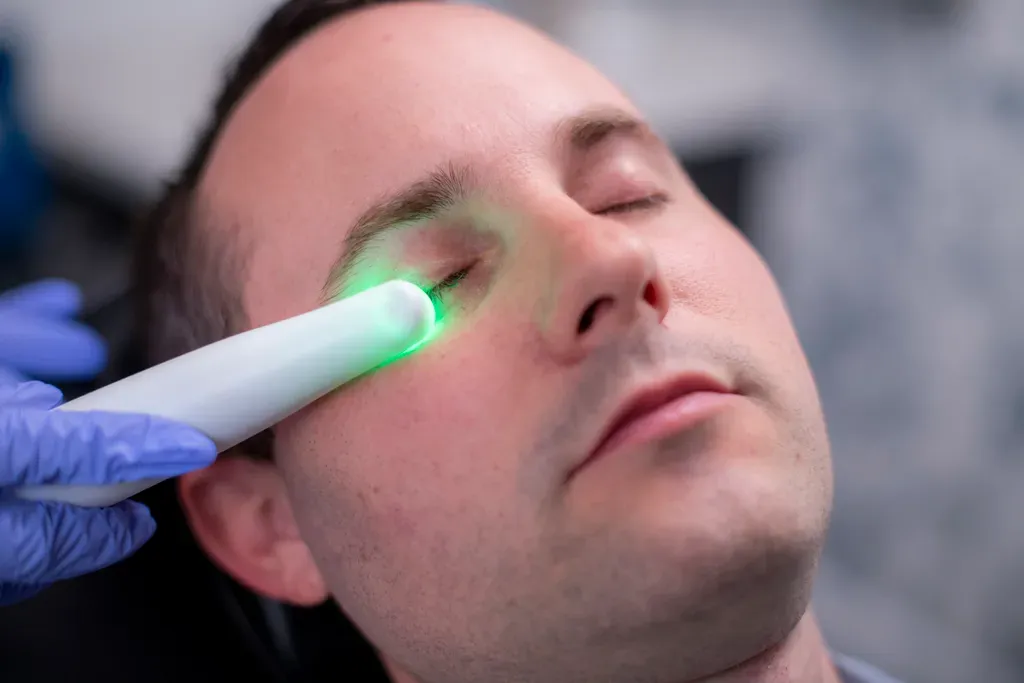
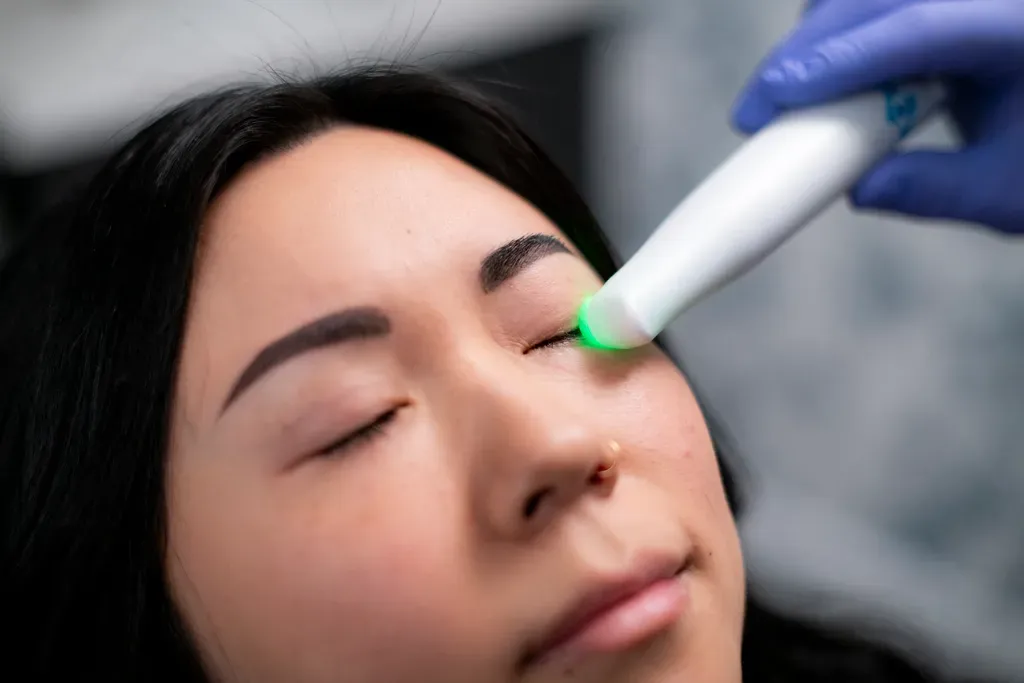
Maintaining proper eyelid hygiene is crucial for preventing and managing dry eyes, Blepharitis, and Meibomian Gland Dysfunction. NuLIDS PRO is designed to exfoliate and stimulate your eyelids, ensuring they stay clean and functional for your everyday activities. In just a few minutes, this innovative treatment removes biofilm and scurf while opening blocked Meibomian Glands — the tiny glands essential for producing the oils that keep your eyes moisturized and comfortable.
Eliminates biofilm & bacteria
Gently removes the buildup of debris, bacteria, and scurf along the lash line that blocks your oil glands and drives chronic inflammation.
Targets Demodex mites
Neglecting eyelid hygiene allows Demodex mites — microscopic parasites that live on the eyelids — to worsen Blepharitis and dry eye. NuLIDS PRO helps eliminate them, reducing inflammation and irritation.
Opens blocked Meibomian Glands
The gentle oscillation action liquifies hardened meibum, opening blocked glands and restoring the natural oil flow that keeps your tear film stable.
Safe, chemical-free, two minutes
NuLIDS PRO is a chemical-free treatment safe for all patients. Most in-office sessions take just 2 minutes — significantly faster than traditional manual lid debridement.
Ready to try NuLIDS PRO?
Ask your doctor about adding NuLIDS PRO to your next visit, or call us to schedule an eyelid health evaluation.
iLight LLLT Pro — Light Therapy for Dry Eye
A painless, 15-minute in-office treatment that uses medical-grade light to reduce inflammation, stimulate your oil glands, and restore a stable, comfortable tear film.
Harnessing the healing power of light
iLight LLLT Pro uses Low-Level Light Therapy (LLLT) — also called photobiomodulation — a technology originally developed by NASA for wound healing and tissue repair. Applied around your eyes, specific wavelengths of LED light penetrate the eyelid tissue, triggering your cells' own natural repair processes. There are no needles, no heat damage, no discomfort, and no downtime.
72%
of patients experience significant reduction in MGD symptoms within 5–8 weeks
15 min
per session — pain-free, contactless, no downtime required
4×
initial series of 4 sessions, then maintenance every 6 months
How does light actually help your eyes?
Your Meibomian glands produce the oil that keeps your tear film from evaporating. When they become blocked or inflamed, that oil stops flowing — and dry eye follows. iLight LLLT Pro addresses this at the cellular level using three specific wavelengths:
Red Light (633 nm)
Stimulates Meibomian gland activity and blood flow. Reduces inflammation in the eyelid tissue. Helps unclog blocked glands so oil flows freely again.
Near-Infrared (830 nm)
Penetrates deeper into tissue than visible light. Improves circulation by dilating blood vessels. Reduces pain and deeper inflammation around the eye.
Blue Light (415 nm)
Antimicrobial properties target Demodex mites and bacteria that accumulate on the eyelids, reducing the bacterial load that contributes to blepharitis.
What to expect at your appointment
Get comfortable
You'll relax in a chair while the iLight LLLT Pro panel is positioned gently over your closed eyes. No eye drops, no anesthetic, and nothing touches the eye itself.
15 minutes of light therapy
The device delivers a warm, gentle light. Most patients describe it as relaxing — similar to lying in warm sunlight with eyes closed. You may feel a mild, pleasant warmth around your eyelids.
Walk out and carry on
There is no recovery time. No redness, no sensitivity, nothing to avoid afterward. You can drive, work, and go about your day immediately after treatment.
Results build over time
Many patients notice initial improvement after the first session. Results become more significant and longer-lasting with each treatment — typically noticeable symptom relief by sessions 2–3, with maximum benefit 4–8 weeks after completing the series.
Who is iLight LLLT Pro right for?
iLight LLLT Pro is especially effective for patients with:
Most effective as part of your complete treatment plan
iLight LLLT Pro works best when combined with your at-home routine (heat, massage, lid hygiene) and other in-office treatments like NuLIDS PRO. Together, these address all four root causes of dry eye — bacteria, inflammation, obstruction, and tear film instability.
How are your eyes feeling?
This short symptom check uses the SPEED questionnaire — the same tool your doctor uses. It's not a diagnosis, but it helps track how you're doing over time.
For each symptom, select how often you experience it. Score: Never = 0 | Sometimes = 1 | Often = 2 | Constant = 3
1. Dryness, grittiness, or scratchiness
2. Soreness or irritation
3. Burning or watering
4. Eye fatigue
This is a screening tool only, not a medical diagnosis. Always discuss your results with your doctor.
Frequently asked questions
Can dry eye be cured?
Dry eye is typically a chronic condition — not curable, but very well manageable. With the right treatment plan, most patients experience significant relief and can prevent progression to more severe stages. Think of it like dental health: you can't “cure” a cavity-prone mouth, but with the right care, you keep your teeth healthy for life.
How long until I feel better?
Most patients begin to notice improvement after their second in-office treatment session. Full benefit from a treatment series is typically felt 4–8 weeks after completing all sessions. At-home care improvements may take 2–4 weeks of consistent daily routine. Be patient — this is a chronic disease, and healing takes time.
Why does my vision fluctuate during the day?
When your tear film is unstable, it breaks up within seconds of each blink, distorting light entering the eye. This creates blur, glare, and difficulty focusing. If your vision briefly clears when you blink, dry eye is very likely a contributing factor — even if your prescription seems fine.
Why do I still need treatment if I'm not symptomatic?
Symptoms are a poor indicator of disease severity in dry eye. Many patients with significant gland damage and high osmolarity have few or no symptoms — until the disease has advanced significantly. Diagnostic testing (gland imaging, tear film analysis) is more accurate than symptoms alone.
Can I keep wearing my contact lenses?
In most cases, yes — but lens type and wearing schedule may need to be adjusted. Some patients do better with daily disposable lenses or specialty scleral lenses. Managing the underlying dry eye also significantly improves lens comfort over time.
Do I really need to do my home routine every day?
Yes — consistency is the single most important factor. Dry eye is driven by daily lifestyle habits, so daily maintenance is necessary to counteract them. Skipping days allows bacteria and biofilm to re-accumulate and oils to re-harden. Once it becomes routine — like brushing your teeth — most patients find it takes only 5–8 minutes.
What are the white things at the base of my lashes?
These “collarettes” — white or yellow cylindrical deposits at the base of your lashes — are a hallmark sign of Demodex blepharitis. They're more common than most people realize. Treatment with Xdemvy eye drops (6 weeks) and regular lid hygiene effectively eliminates them. If you've noticed these, mention it to your doctor.
Will the in-office treatments hurt?
Most patients find our in-office treatments comfortable or mildly uncomfortable at most. LLLT is a gentle warm glow. Gland expression involves mild pressure. The most common feedback from patients after their first session: it was much more comfortable than expected.
Have questions about your treatment?
Our team is here to help. Call us or schedule a follow-up — we're committed to making sure your care plan is working for you.
Call Towne Lake Eye Associates